BY: KELSEY WILLIAMSON
(Gainesville, Ga.) – To pray, or not to pray? That is the question America is asking when it comes to prayer in schools.
The U.S. Supreme Court banned prayer in public schools more than 50 years ago, but it may not have been the popular decision at the time. It may still not be the popular opinion as a new Gallup poll revealed that 61 percent of Americans favor the ability to pray in the classroom, and even more think public school rooms and facilities should be available for student religious groups to use.
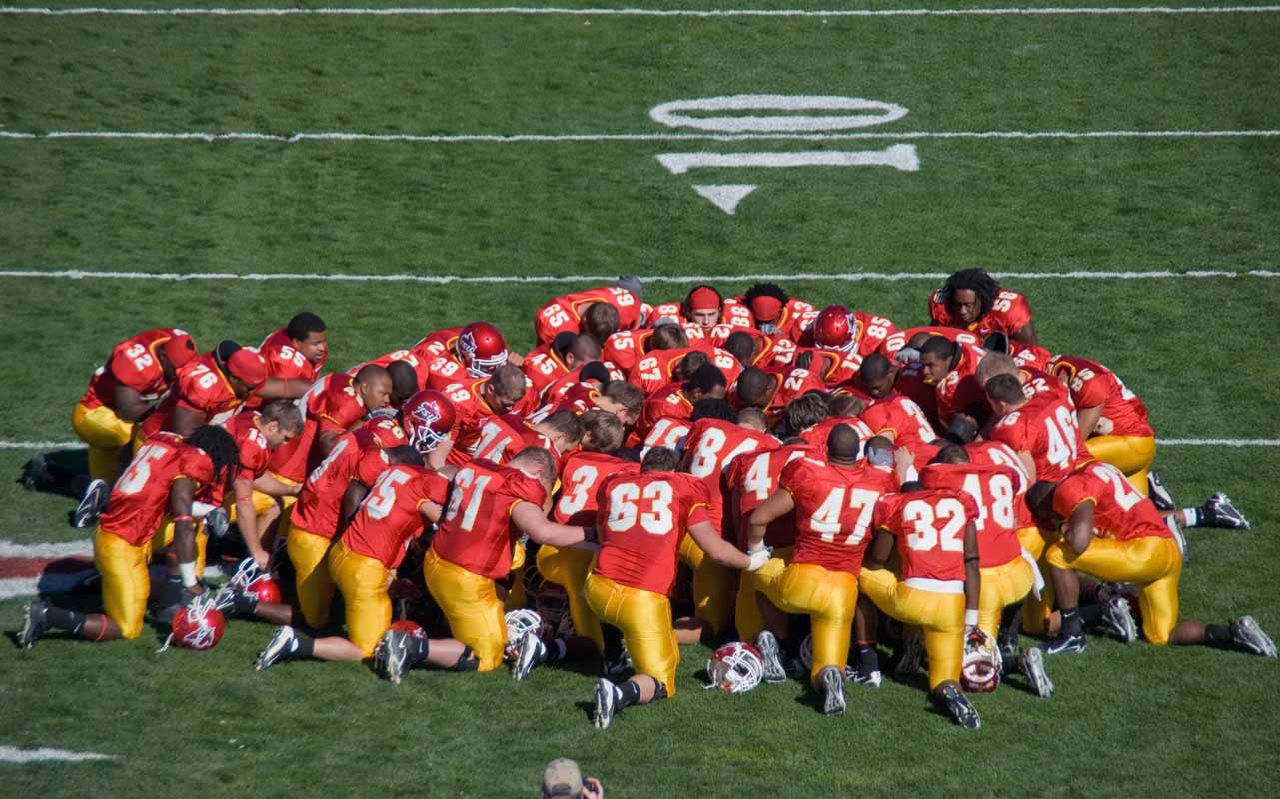
A large number of responders even indicated that they are in favor of allowing students to say prayers at graduation ceremonies. But not on the football field?
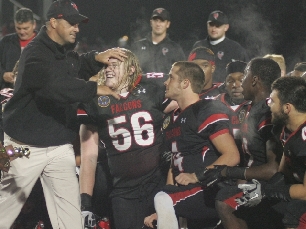
The Columbus Dispatch reported that Licking Valley High School is being investigated by the Freedom From Religion Foundation because a player, a student, led his team in prayer – and coaches chose to pray too.
FFRF attorney Rebecca S. Markert claimed that “While students may wish to engage in prayer on their own, school staff, including coaches, cannot participate or encourage such religious activities.”
Students may practice or pray if they want to, but coaches cannot exercise their religion?
As a topic that has been widespread over the past six months, answers to the prayer question vary in different situations.
A volunteer football coach in Arizona was fired for letting his players continue to pray after being instructed to tell them to stop. A school system in Georgia was investigated by the American Humanist Association for letting students and players pray before games. A Tennessee school was instructed by the American Civil Liberties Union to stop prayer before games, even those that were student-led. Licking Valley High in Ohio was not only accused of violating policies about prayer before games but also encouraging a specific religion because the marching band’s shirts featured the word “salvation” as part of their 2014 field show, “Salvation is Created,” which Pavel Tchesnokov wrote in 1912.
However, in each of these situations, students continued to pray, wear religious symbols, and speak their minds. In Tennessee, the cheerleaders led the Lord’s Prayer in direct violation of the ACLU’s request. In Ohio, the superintendent stopped responding to the FFRF’s comments.
What’s next? Organizations telling students to stop wearing rosary beads or cross necklaces? Yarmulkes and hijabs?
Many of these objects, crosses, rosaries and Hebrew writing in particular, are current fashion trends. But according to many of these organizations’ arguments about participation equaling advocacy, wearing a shirt with a verse or a symbol on it, or a piece of jewelry featuring a religious icon should qualify as “endorsing” the religion.
The letter from the AHA to Chestatee High in Georgia stated that “This involvement in prayer as a ‘participant, an organizer, and a leader’ would unquestionably ‘lead a reasonable observer to conclude that he was endorsing religion.’”
But according to the Gallup poll, so is a majority of other people, or at least endorsing the right to practice freely.
Annie Laurie Gaylor is the co-president of the FFRF, which advocates the “protection of the constitutional principle of the separation of state and church,” according to the group’s website.
She stated to the Huffington Post “I think that luckily constitutional law is not voted on by the majority.”
However, if opinion has only changed slightly over half a decade, maybe the Supreme Court got it wrong 50 years ago. Maybe this freedom should return.
The Constitution does say freedom of religion, not freedom from religion, after all.